8/13/2024
We have a little bad news to share. Two of our colonies have absconded. The culprit was small hive beetles. Clearly, this didn’t happen overnight, so we’ll share what we know and what we’re doing about the problem.
The Sunshine Box

Back in July, just before I caught COVID, I noticed that the Sunshine hive population wasn’t growing as fast as the others were. I was keeping an eye on them and had started to remove frames that weren’t being used. Then I caught COVID and couldn’t check on the bees for at least two weeks.
On July 13th, the date of the previous post, I checked on the colony and thought they were doing okay. Again, small population, but still active. I did see some small hive beetles, but it looked like the colony was managing them. And yet less than a week later, they absconded.
We had a typical small hive beetle mess to clean up. Frames were pulled and placed in the freezer and all of the beetle larvae we saw on the bottom of the box were collected and burned up. What a mess.
After cleaning up the box, we spread a hefty layer of diatomaceous earth around all the other hive boxes. As I think I’ve said before, it’s not a total solution to the problem, but it should help control the beetles.
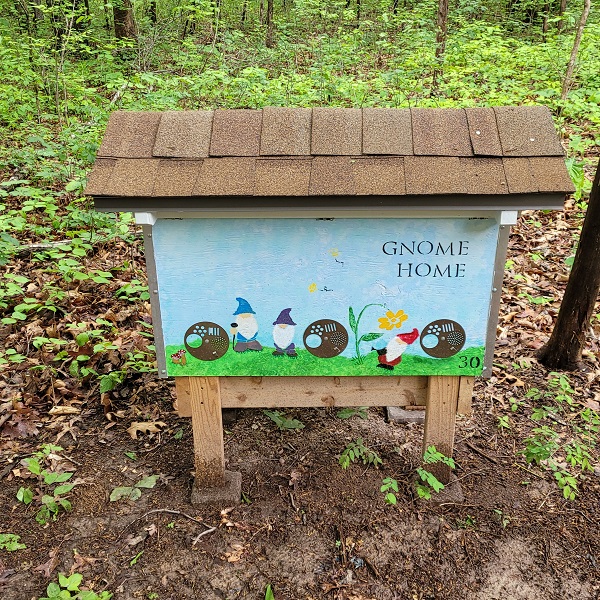
The Gnome Home

We thought that after placing the Howard County swarm in this box, we should be set for this season. It was not to be.
We kept noticing a lot of bee activity and thought that they were doing okay. The frames I inspected seemed to confirm this. That being said, over around the weekend of the 3rd of August, they absconded. It’s hard to say when the beetles took control of the box, but when we opened it up that next Monday, they had taken control.
Once again, the typical slimy, disgusting (even to me) mess to clean up. After the cleanup, it was decided to be more active in controlling this pest.
Next Steps
Swiffer Sheets

We both heard and read anecdotal accounts of these dry cloths used with small beetle control. A typical account is found here. Good information, but I couldn’t find any peer-reviewed articles. At this point, I was ready to try about anything, so we bought a box of generic dry cloths and placed two in each hive box.
Beneficial Nematodes
We then started looking for something that would kill the larvae and adults that are in the soil. After a lot of looking through research papers such as this one from the Nation Library of Medicine, we found that nematodes can kill both adult and larvae.
The idea is that by spreading the nematodes under and around the apiary’s hive boxes, they will look for small hive beetles in any stage of growth and then kill and eat them. Detractors say that even if what is claimed is true since the pests are everywhere they will return, so nothing is accomplished. That might be, however the current life cycle of the beetles in the apiary would be disrupted. We then decided to buy some and see for ourselves how effective they are.
After the decision was made to try them, it was time to find a supplier. After looking at the various options, and there are many, we decided on Arbico Organics. Their webpage had a great deal of good information and the cost was reasonable. So we purchased 5 million heterorhabditis indica. And they arrived two days later.
Applying the Nematodes

Once they arrived, we opened the package and began digesting the instructions. It seemed that the best conditions for applying the nematodes was after a rain. Rain was not in the forecast for the next few days, so we hauled 5 five gallon buckets of water twice to the apiary and spread it under the hive boxes. That was a little difficult to do, but we managed.
While the water was soaking the ground, we got the nematodes ready for use. The video below shows the process.
After we finished up the mixture was further diluted in five gallons of water.

Now it was time to apply them. All we has was a green watering pitcher from one of our parents. The screen didn’t last long.
I liberally applied the nematodes around and under all the hive boxes.


It is too soon to tell if this will make a difference. With all the work it took, we are hoping for good results.
Last modified:
Leave a Reply