8/23/2023
When we started building frames, hive boxes, and swarm traps, we had no idea what form or shape it would take as the project moved forward. We took a few pictures and most weren’t all that great, so this go around the plan is to work a little slower, share more, and maybe even take better pictures.
With that said, yesterday I started working up frame sides for use next year. Since we want to build 3 more hives, we’ll need at least 60 more frames. Sixty frames means 120 sides. It’s a pretty large task to be completed.
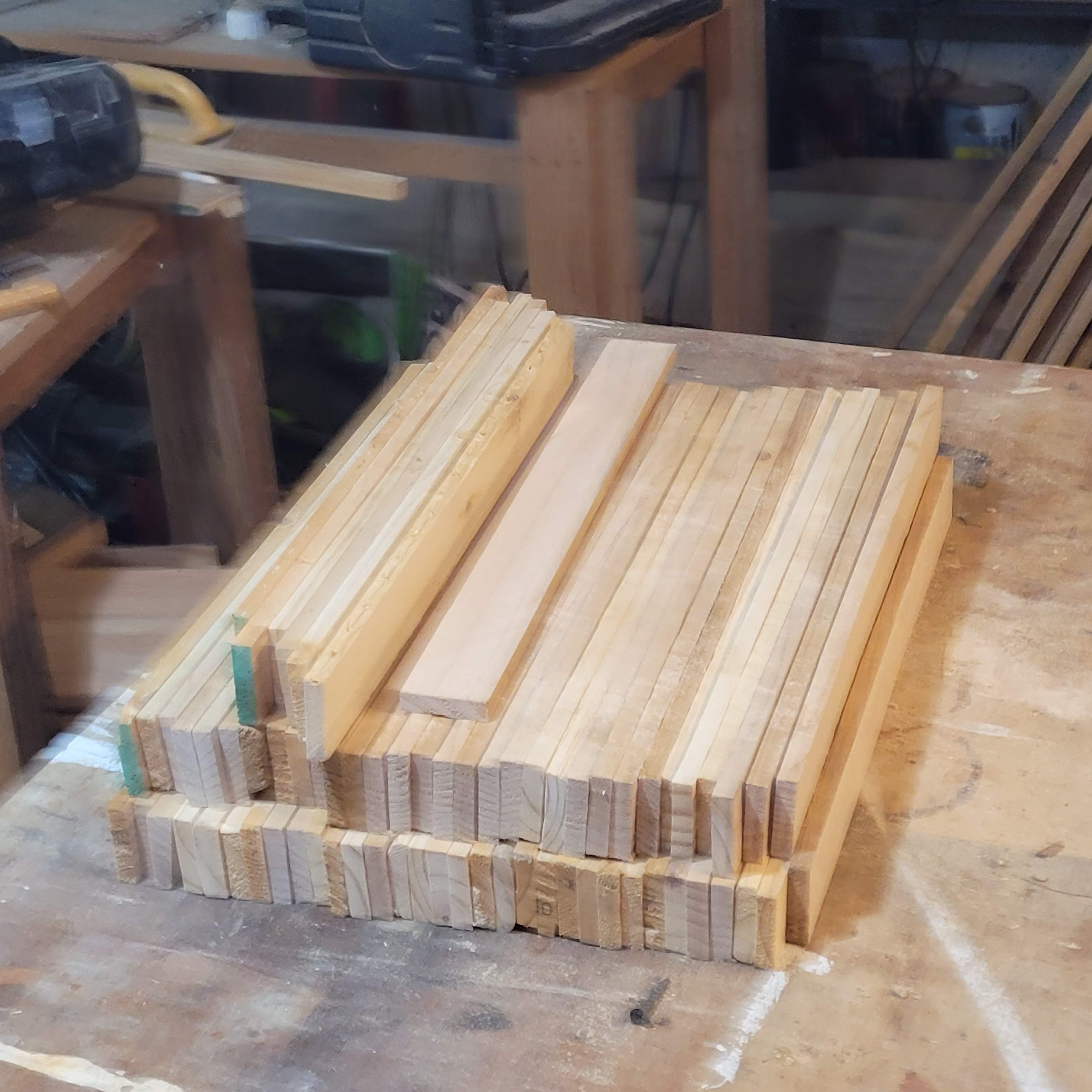
Earlier this month, or maybe in late July, I cut up a bunch of blanks to be made into frame sides.

The picture above shows 68 blanks. This will be enough for 34 frames, if all goes well. They were made from the rest of scrap 2×4’s that I had plus some scraps we bought at Menards. We had some left over Menards rebate funny money that we used to pay for them.
The blanks are 1 1/2 inches x 3/8 inch. Once you start cutting them to size, it’s sort of a automated process.
The real work is in creating the taper. The picture below shows the original dimensions of the Layens frame. The plans call for using a 1/4 inch router bit and taking that much off of each side. The purpose of cut is to provide “bee space.” It’s simply a space that allows the bees access to other frames.

I tried using a router bit last year. I managed to burn it up in about 60 seconds. Of course then, and to some extent now, I was recovering from COVID.
What I ended up doing then and now is using my taper jig to take a slice out starting about an 1 1/2 inches from the top. When done on both sides, it leaves between 3/4 and 1/2 inch at the bottom.
The picture below is the setup of the taper jig. I marked an area on the bottom that was centered and about 1/2 inch wide. I drew a line between from 1 1/2 inches from the top to the area on the bottom. I then used the narrow side of the framing square to help set the angle of the jig.

Trial cut results. Close enough.

Then I started on the first cut on the rest of the blanks.

Then you have to adjust the jig for the second cut. The easy way to to this is to tape a piece of what was cutoff in the first cut and tape it to the jig.

First cut with the adjustment.

The results looked pretty good, so it was time to do the rest of the pile. With the wood being scraps, there are a lot of imperfections in the wood, so the finished product is by no means perfect. I don’t think the bees will care.

Not bad for an afternoon’s work.
Last modified:
Leave a Reply