
On the timeline, we are up to December, 2022 and January, 2023.
What’s a swarm?

According to Wikipedia, a swarm is a honeybee colony’s natural method of reproduction – the article can be found at this link. Additionally, it is a means to protect and extend the genetics of the colony. That being said, the genetics of the colony does change naturally depending on the drones the queen mates with.
Simplified bee colony life cycle
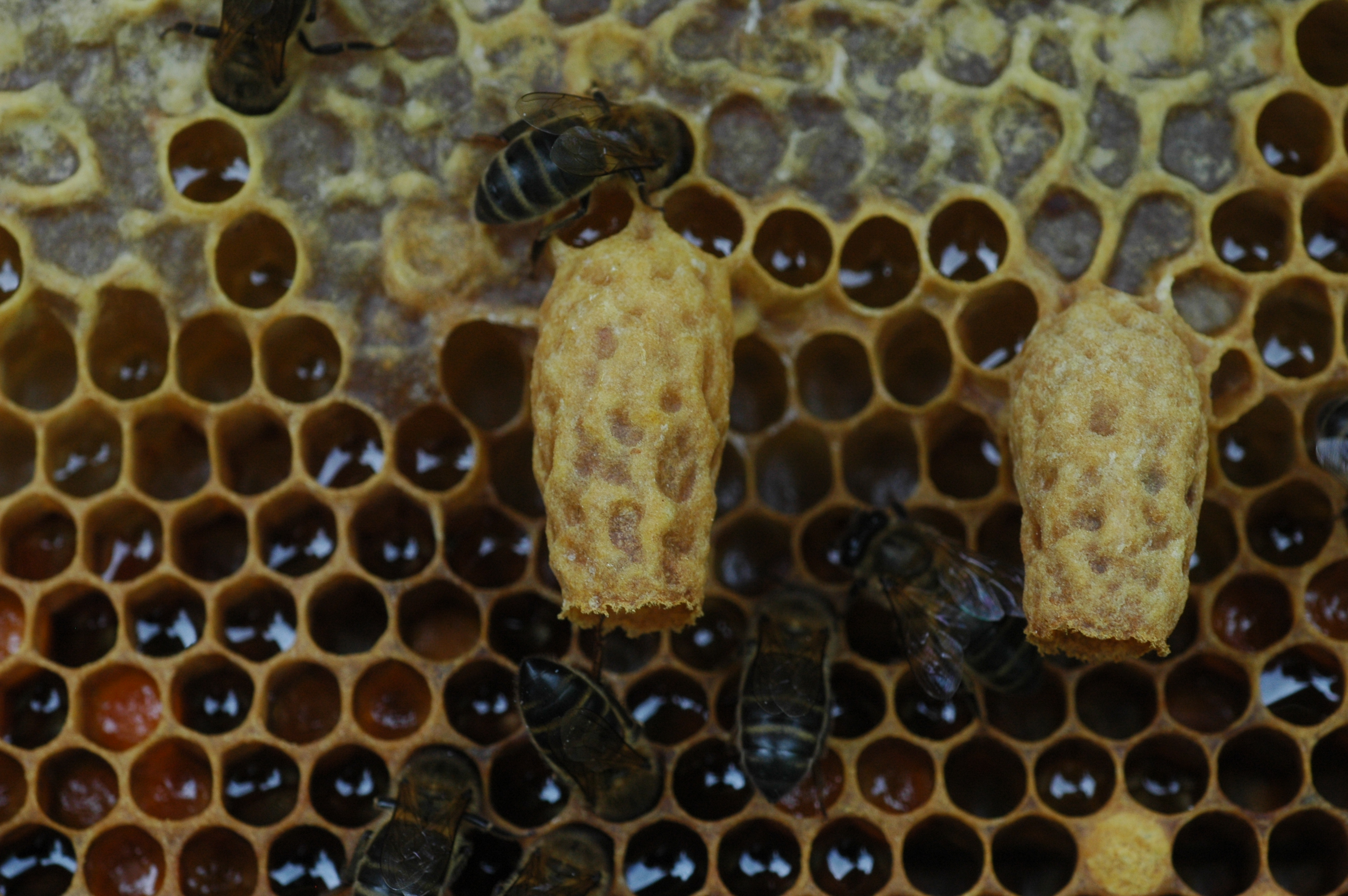
The process itself is both complex and fascinating. Bees bring pollen and nectar into the hive throughout the spring and continuing into fall. The pollen serves as a protein source and is mainly used as larva food. The nectar is turned into honey. The real purpose of gathering pollen and nectar – which is not to provide us with honey – is to prepare for winter. The bees create honey, make propolis to fill in any unwanted drafts, create drone cells, and expand the total population of the colony. When the population reaches a point, as determined by the colony, queen cups are formed. Once the queens hatch and the colony decides which of the new ones to accept, the old queen leaves the hive with a large number of worker bees – this is called a swarm. This process may happen once, and in some colonies, up to four or more times per season.

As winter starts to arrive, the population of the colony decreases until hopefully enough are left to survive. During this time, the bees form a cluster in the center of the hive to maintain the temperature high enough for survival. The cluster eats the stored honey that they can get to, typically starting in the middle of a frame and slowly moving up.
If there is not enough stored honey, the colony dies. If they do die, the genetics are preserved through the swarms of the previous season.
What is a swarm trap?
This is an interesting question. People seem to relate this to a live trap which is used to capture small animals such as opossums, raccoons, feral cats, etc. This isn’t really the idea. According to Dr. Leo a “swarm trap is basically any watertight wooden or plywood box with a volume of 40 to 70 liters (10 to 18 gallons) and a two-square-inch entrance towards the bottom of one wall.” So, to restate, a swarm trap is any watertight enclosure with adequate space to serve the needs of the bee colony – at least on a temporary basis.
Construction

The actual construction of the traps was pretty straight forward. The body was made from a 1″ x 12″ x 10′. The plans can be found here. Each trap hold 7 Layens frames. We built 3 for now.
After they were built, they were given 3 coats of paint. Then Linda decided they should be dressed up. I think she did a great job. Pictures below:


Last modified
Leave a Reply