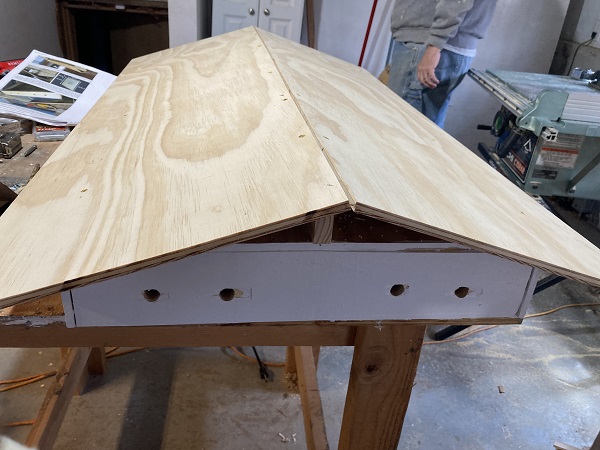
Types of tops
There are two types of tops that we could use for the hives; one is a flat top and the other is peaked. Both of them are functional. The flat top is easier and costs less to make. My concern was that I would not be able to lift it off by myself. According to Dr. Leo “Peaked roofs on horizontal hives don’t just look pretty — they are functional. The overhang sheds water away from the hive walls, greatly extending their life, and shades the hive box during the hottest hours of the day. The ventilated attic space helps with temperature regulation, preventing overheating even in the hottest of summers. If your hive is decorated with fanciful designs, the peaked roof (also called gable roof) prolongs the life of the painting.” Peaked roofs do have one disadvantage, they both take a little longer to make and may cost more.

After much thought, we decided to use the peaked roof design. However, when going over the plans we discovered that the roof covering, if it could be found, was prohibitively expensive. The plans for the peaked roof is found here: https://horizontalhive.com/how-to-build/peaked-roof-layens-hive.shtml .

The base of the peaked roof is essentially the same as the flat top. There are a few differences which include adding hinges and drilling some ventilation holes.
Roof construction pictures


Roof coverings
The plans called for material that was not obtainable, so at first we used what we had, namely tar paper and shingles. A couple of years ago we had the shed reshingled and there was some tar paper and a package of shingles left over. This material was put to use on the first two hives.
Shingling pictures


The metal roof
We had some 20 inch flashing left over from swarm trap construction. More on that later. It wasn’t quite enough, so we bought a roll of 10 inch and sort of patched it all together.


Last modified
Leave a Reply